Industry news
EU PPWR for Patch Packaging: What Changes from August 2026
Industry news 2026-07-14 09:30:00 117 views admin
EU PPWR for Patch Packaging: What Changes from August 2026
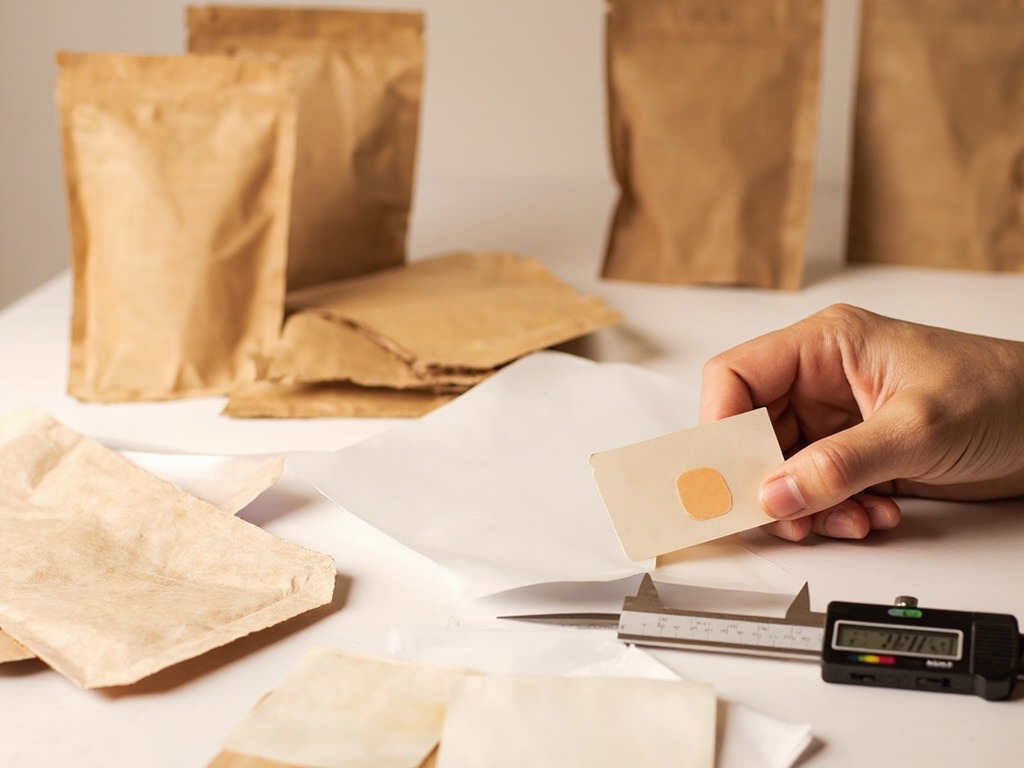
EU Regulation 2025/40 on packaging and packaging waste (PPWR) applies from 12 August 2026, but its main recyclability and minimisation deadlines arrive later. Patch brands should use the intervening years to classify each packaging layer, document why it is needed, and remove material combinations that have no clear protective function.
Regulatory note: this briefing is a practical reading of the published EU text, not legal advice. Product classification and the role of each packaging layer determine which provisions apply.
The date that matters now
The PPWR entered into force in February 2025 and becomes generally applicable on 12 August 2026. That date does not mean every pouch and carton must already meet the 2030 recyclability grades. It does mean brands selling into the EU should stop treating the regulation as a distant proposal.
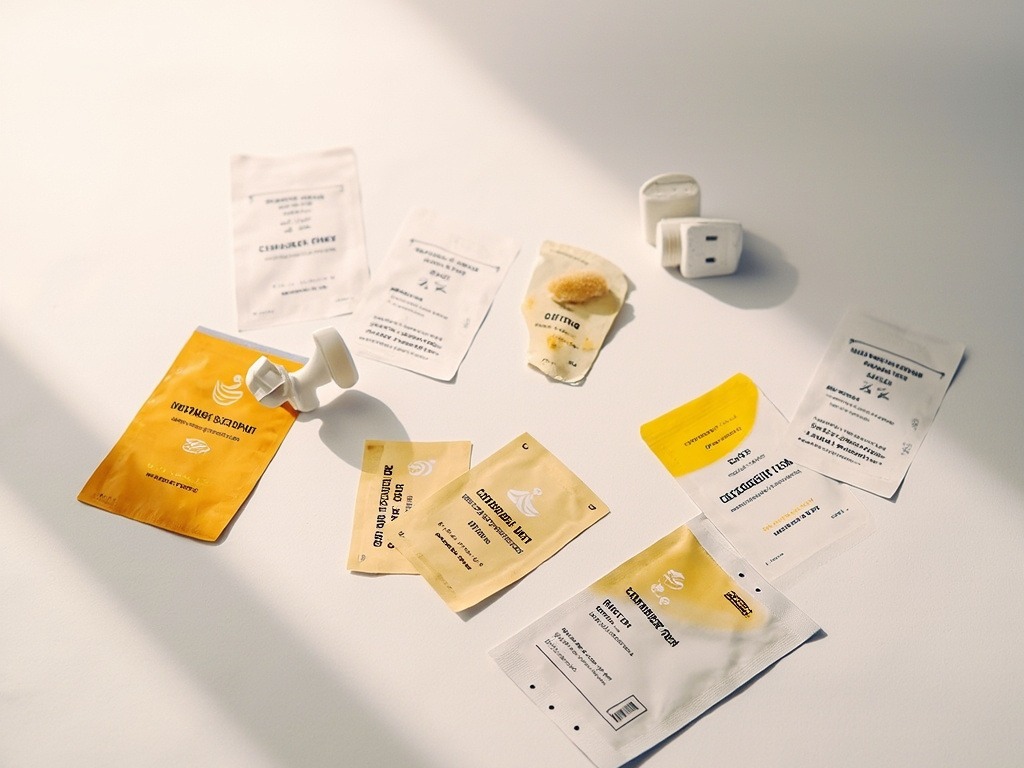
The useful starting point is a packaging bill of materials. For a patch product, that may include a release liner, primary pouch, printed label, folding carton, leaflet, tamper feature and transport case. Record the material, weight, supplier and function of each item. A claim such as “the foil layer protects the product” is not enough on its own; keep the stability, seal-integrity or transport evidence that supports it.
A working timeline for patch brands
| Date | PPWR milestone | Practical action |
|---|---|---|
| 12 August 2026 | Regulation applies, except for specified later provisions | Confirm product and packaging classification; assign ownership for packaging records. |
| By 1 January 2028 | Commission is to establish design-for-recycling criteria and performance grades | Avoid locking a new product into a hard-to-separate laminate without an evidence-based reason. |
| 1 January 2030 or later trigger in Article 6 | Packaging must meet grade A, B or C where Article 6 applies | Request material declarations and component-level recyclability information from suppliers. |
| 1 January 2030 | Weight and volume must be reduced to the minimum needed for packaging functionality | Measure empty space, carton size and each layer’s protective purpose. |
| 1 January 2035 | Recycled-at-scale condition begins under the Article 6 timetable | Check whether the chosen format works in real collection and sorting streams, not only in a laboratory. |
| 1 January 2038 | Only grades A or B remain acceptable under the general Article 6 rule | Plan redesign cycles well before artwork and tooling become stranded costs. |
Medical and medicinal packaging: read the exceptions narrowly
Article 6 excludes immediate packaging for medicinal products and contact-sensitive packaging for medical devices from its recyclability requirements. It also covers certain outer medicinal-product packaging when that outer pack is necessary to preserve product quality.
That is not a blanket exemption for every patch or every box around it. A wellness patch may not be a medicinal product or medical device at all. A carton used mainly for shelf presence may also be treated differently from the sealed pouch that protects a drug-containing matrix. The intended use, claims and route to market need to be settled before the packaging team relies on an exception.
What “minimum packaging” asks a brand to prove
Article 10 requires packaging weight and volume to be reduced to the minimum necessary for functionality from 2030. Annex IV explains what functionality includes: product protection, manufacturing and filling, logistics, information, hygiene, safety and legal requirements.
For patches, the evidence file can be quite concrete:
- Pouch barrier data tied to moisture, oxygen or volatile-ingredient risk.
- Seal validation and leak-test results at the selected pouch dimensions.
- Stability results in the actual market pack, not only in a laboratory jar.
- Transport tests showing why a carton board grade or case configuration is needed.
- Artwork and leaflet requirements that cannot safely fit on a smaller format.
- A short written assessment of layers or empty space that were removed during development.
The regulation also calls out double walls, false bottoms and unnecessary layers used only to increase perceived volume. A large carton around a small pouch therefore deserves an early review.
A supplier request that produces usable answers
Ask packaging suppliers for more than a one-line “recyclable” declaration. A useful technical pack identifies the predominant material, every barrier and coating, adhesives, inks, closures, separable components and the weight of each component. Annex II notes that adhesive residue, heavy colouring, coatings and incompatible material combinations can reduce recyclate quality.
For a new private-label project, compare at least two constructions: the current high-barrier option and a simplified alternative. Run stability and seal work before choosing the final structure. The lower-material option is only better if it still protects the patch through its labelled shelf life.
Four decisions to record before approving artwork
- What is the product category? Record whether the item is a medicinal product, medical device, cosmetic or general wellness product in the target country.
- Which layer touches or protects the patch? Separate contact-sensitive and immediate packaging from secondary and transport packaging.
- What test justifies each barrier? Link packaging choices to stability, light, seal and shipping results.
- Can the same function be achieved with less material? Test the answer before committing to tooling, artwork and minimum-order quantities.
Henan Hanmeng Bio-Tech can use this evidence list when discussing pouch, carton and private-label options with a buyer. Final EU compliance decisions should be checked against the product classification and current delegated acts in force at the time of launch.
Sources
- Regulation (EU) 2025/40 on packaging and packaging waste, especially Articles 6, 10 and 71, plus Annexes II and IV.
- Official Journal publication record for Regulation (EU) 2025/40.
Looking for a Custom Patch Manufacturer?
Henan Hanmeng Bio-Tech produces private-label pain relief patches, herbal heat patches, cooling patches, nasal strips, and hydrocolloid patches on certified production lines. FDA, EU CE, and ISO 13485 documentation included. Samples shipped in 7 days; bulk MOQ negotiable.
View Our OEM Catalog Request a Quote
Henan Hanmeng Bio-Tech · Henan, China · +86 17796669065 · 396269538@qq.com
CATEGORIES
LATEST NEWS
CONTACT US
QQ: 396269538
Phone: 17796669065
Tel: 17796669065
Email: 396269538
Add: Room 001, 1st Floor, Building 1, Zhengzhou Hangmei International Smart City, Intersection of S102 and Nanquan Road, Xuedian Town, Xinzheng City, Zhengzhou, Henan Province, China