Industry news
best back pain patch for nerve pain
Industry news 2026-08-21 10:30:08 50 views admin
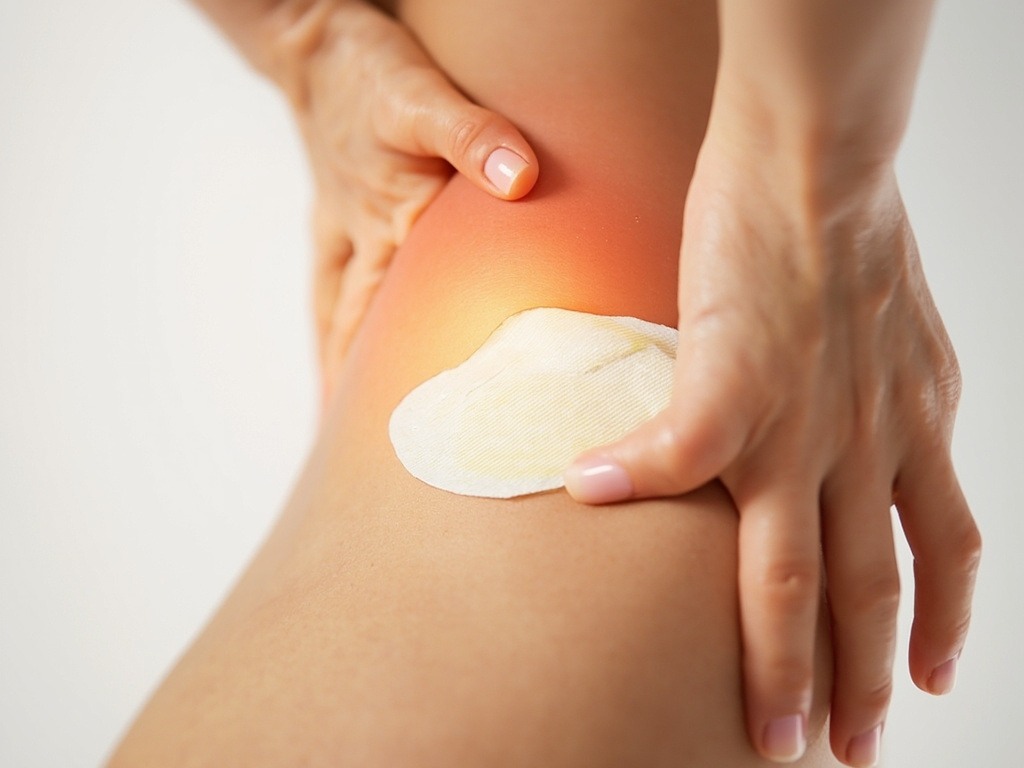
Best for: adults with nerve-dominant back pain, people who sit at a desk for long stretches, older shoppers looking for non-oral options
A patch for nerve pain in the back works best when the active layer sits over the dermatome where the burning, tingling, or shooting sensation is most intense, and when the contact surface stays in place for at least 6 hours. For a shopper scanning the category, the practical shortlist is a counter-irritant patch (menthol, camphor, or capsaicin as the labeled active), a low-dose lidocaine patch, and a warming herbal patch with or without a mild NSAID. The right match depends on whether the pain feels like burning, shock-like, deep-aching, or cold-sensitive.
Why back pain feels "nerve-like" — three mechanisms worth telling apart
Back pain that shoppers describe as nerve pain usually hides one of three things, and the patch choice follows from the mechanism, not from the label.
Radicular irritation is the textbook version: a disc or a thickened ligament presses on a spinal nerve root, and the signal travels along the nerve into the buttock, the back of the thigh, or down the leg. The skin over the path can feel electric, hot, or numb. Capsaicin and low-dose lidocaine are the two actives most often associated with this pattern because they act on the peripheral nerve ending rather than on the muscle underneath.
Neuropathic sensitization is a quieter version. The nerve itself may look normal on imaging, but small-fiber receptors have been turned up by sleep loss, by stress, or by a prior injury. The back skin feels tender to light touch, and ordinary fabric can sting. Counter-irritants feel out of place here; a non-irritating lidocaine patch usually sits better on this skin.
Referred muscular pain is the third pattern. A trigger point in the quadratus lumborum or in the piriformis can mimic nerve pain because the referral map overlaps the sciatic distribution. The patch goes on the muscle, not on the dermatome, and a warming patch with mild counter-irritant action often outperforms a pure numbing agent. A simple at-home test helps: press the sore spot in the muscle for 10 seconds. If that pressure reproduces the leg or buttock pain, the pattern is muscular and the patch should sit on the muscle.
Matching the patch type to the symptom pattern
Match the patch to what the skin is doing, not to what the box says.
- Burning or hot, with normal touch — capsaicin low-concentration (around 0.025%) or a menthol/camphor counter-irritant patch, both designed for intact skin.
- Electric, shock-like, on a clear dermatome line — a lidocaine 3.5% or 4% patch, applied for the labeled wear time, usually up to 12 hours on, 12 hours off.
- Deep, cold, or "like ice water" along one side — a warming patch with capsaicin or with a herbal warming blend; avoid ice packs on this pattern because cold can amplify the signal.
- Diffuse, tender to light clothing — a fragrance-free lidocaine patch on the tender zone; skip menthol, which can feel sharp on sensitized skin.
- Tight band across the lower back with morning stiffness — a counter-irritant or mild-warming patch placed on the paraspinal muscles, not on the spine itself.
The patch should cover the painful dermatome plus about 2 cm of healthy skin around it. A patch that is smaller than the painful zone will only numb the center and leave the rim firing.
Body-area matrix: where the patch actually goes
The same back pain patch behaves differently on the neck, the shoulder blade, the lower back, and the knee. The table below maps the common placement zone, the dominant symptom pattern at each site, and the patch type that fits the pattern best.
| Body area | Common symptom pattern | Best-fitting patch type | Practical note |
|---|---|---|---|
| Neck (cervical paraspinal) | Tingling into the shoulder or arm, stiff rotation | Low-dose lidocaine, fragrance-free | Trim the patch to follow the C5–C6 dermatome; keep clear of the throat. |
| Shoulder blade (scapular) | Trigger-point referral, burning under the blade | Menthol/camphor or warming herbal | Reach-around placement is awkward; a flexible woven backing helps. |
| Lower back (lumbar) | Sciatic-pattern nerve pain, deep ache | Lidocaine or capsaicin depending on skin tolerance | Place below the belt line if the patch slips when seated. |
| Knee (when back pain refers down) | Cold-sensitive patch behind the knee, burning at the joint line | Lidocaine on the back of the knee, counter-irritant on the joint line | Do not stack patches across a flexed joint; the adhesive will shear off. |
Two body-area rules that come up in the clinic: the patch on the neck should never overlap the carotid pulse or the thyroid cartilage, and a patch on the lower back should be placed while standing so it does not fold when the wearer sits down.
Wear time, skin tolerance, and the 24-hour budget
Wear time is where most patches fail in real life. The active ingredient may be present for the full labeled duration, but the contact between the adhesive and the skin rarely holds for that long on a moving area like the lower back. Plan around three numbers: a single-session wear time, a daily maximum, and a weekly budget.
For lidocaine patches the labeled cycle is usually 12 hours on, 12 hours off, with no more than three patches on the body at once. For counter-irritant menthol or camphor patches the on-time is shorter, often 6 to 8 hours, and the daily maximum is set by the active load rather than by the adhesive. For warming patches the wear time is governed by skin temperature: if the patch feels uncomfortably hot before the labeled end-time, take it off, because a warming patch that is too hot can blister intact skin within 20 minutes.
Skin tolerance has its own weekly budget. A capsaicin patch can leave the area hypersensitive for 48 to 72 hours after removal, so two patches in the same spot per week is usually the upper limit. A lidocaine patch is gentler on the skin but can leave a contact rash if used daily for two straight weeks. A simple rotation rule: alternate two non-overlapping sites, and give each site two rest days per week.
Decision rule for the back-pain-patch shelf
Before a shopper adds a patch to the cart, three checks matter more than the brand or the price.
First, locate the spot. Press along the spine and3 cm to each side until one pressure reproduces the dominant symptom. Mark it with a water-based pen if needed; the patch goes there, not where the box illustration suggests.
Second, read the active and the dose. Lidocaine is listed as a percentage (often 3.5% or 4%), menthol is listed as a percentage (often 5% to 16%), capsaicin is listed as a percentage (often 0.025% for low-strength and 0.075% or higher for high-strength). A patch with no listed active, or with a proprietary blend that hides the percentage, is a soft signal that the dose is too low to act on nerve endings.
Third, check the backing. A woven or fabric backing breathes and tolerates sweat; a fully occlusive film backing can macerate the skin under a heating patch within 4 hours. If the wearer plans to apply the patch in the morning and keep it through a workday, a breathable backing is the safer pick.
Safety, limits, and when a patch is the wrong tool
Patches are an external tool and they have honest limits. They do not reach deep structures, they do not correct a herniated disc, and they are not a substitute for evaluation when the back pain is paired with leg weakness, with bowel or bladder changes, with night pain that wakes the sleeper, or with fever. Those red flags point to a clinician, not to a stronger patch.
Skin reactions are the most common real-world adverse event. Counter-irritant patches can produce a contact dermatitis that looks like a sunburn and lasts 3 to 7 days. Lidocaine patches can produce blanching, redness, or a hive-like rash at the edge of the adhesive. Warming patches can produce a thermal burn if the wearer falls asleep on a heating pad while the patch is on. Stop use and seek advice if the skin under or around the patch blisters, peels, or stays numb for more than an hour after removal.
Drug interactions deserve a line on the box of any shopper's checklist. Lidocaine is systemically absorbed in small amounts, and high doses applied over large areas can interact with certain heart and antiarrhythmic medications. Anyone on a prescription heart drug should clear a lidocaine patch with the prescriber before regular use. Pregnant shoppers should clear any patch, including herbal warming patches, with their clinician, because the safety data on transdermal absorption in pregnancy is thin.
Putting it together: a buyer's shortlist by scenario
The decision rule that ties the article together is straightforward. If the symptom map is a clear nerve line and the skin tolerates adhesive, a low-dose lidocaine patch is the safest first try. If the symptom map is a deep muscle referral and the skin is intact, a counter-irritant or warming patch on the muscle usually beats a numbing patch. If the skin is reactive, fragrance-free and dye-free come before strength on the label.
For most adult shoppers, the practical shelf holds three items at most: one lidocaine patch for nerve-line pain, one counter-irritant patch for muscular referral, and one fragrance-free option for sensitive skin. That trio covers the neck, the shoulder, the lower back, and the knee without forcing the wearer to chase a fourth or fifth specialty product.
Henan Hanmeng Bio-Tech develops private-label patch formats for pain-care brands, with formulation support for counter-irritant, warming, and lidocaine-style SKUs intended for over-the-counter distribution under the customer's own brand.
CATEGORIES
LATEST NEWS
CONTACT US
QQ: 396269538
Phone: 17796669065
Tel: 17796669065
Email: 396269538
Add: Room 001, 1st Floor, Building 1, Zhengzhou Hangmei International Smart City, Intersection of S102 and Nanquan Road, Xuedian Town, Xinzheng City, Zhengzhou, Henan Province, China