Technological innovation
lidocaine patch manufacturer
Technological innovation 2026-07-28 09:00:51 62 views admin
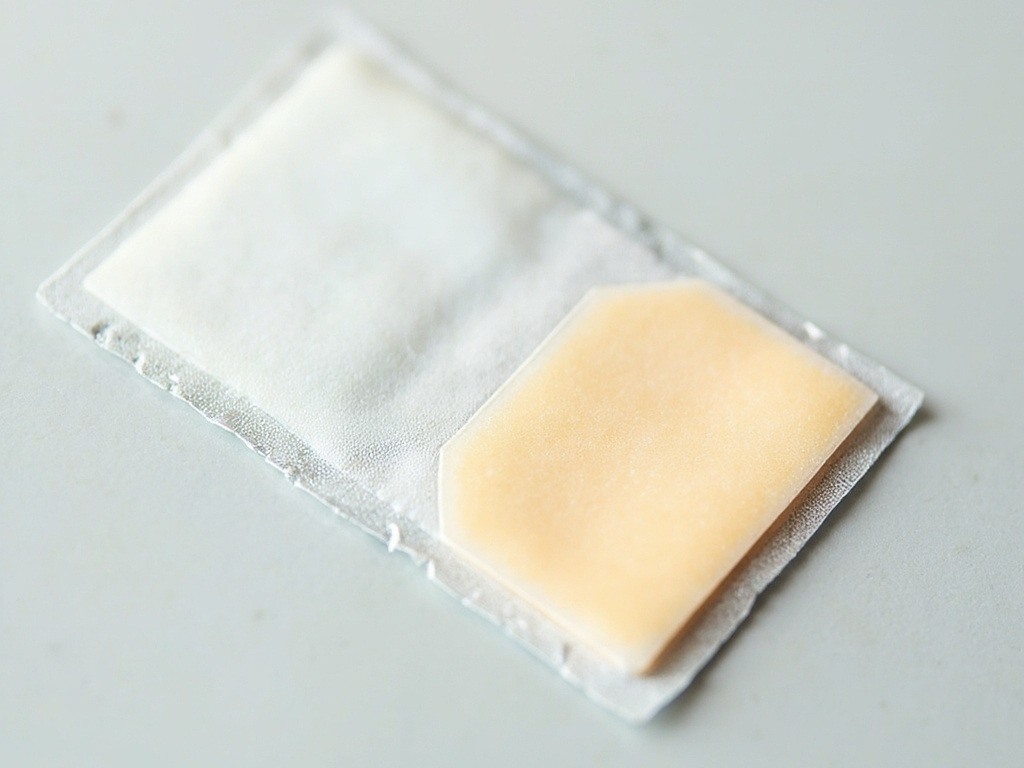
Best for: professional B2B buyers, procurement leads at compounding pharmacies, medical device sourcing managers, private-label brand developers.
A lidocaine patch manufacturer is typically a specialized topical drug-delivery producer that combines an adhesive matrix, a backing film, and a release liner to deliver a measured local dose of lidocaine through the skin. Buyers evaluating this category usually need to distinguish between an original developer (often research-driven and patent-aware), a contract manufacturer with topical-matrix capability, and a private-label/OEM partner that can rebrand an existing, already-registered formulation.
Decision tree: which manufacturer type actually fits your order
- Are you launching under your own brand in a regulated market? If yes, prioritize an OEM/ODM partner with documented topical-patch GMP history, not a one-line trading company. If no, a regional distributor or wholesaler may be lower friction.
- Do you need a customized drug load, patch size, or adhesive profile? Customization usually points to a manufacturer with R&D and pilot-line capacity. A pure relabeler cannot change formulation parameters.
- Do you need the same SKU sold across multiple countries? Cross-border buyers should confirm which markets the partner already supports for documentation, not assume global coverage.
- Is your volume above 100,000 units per SKU? High-volume runs require a dedicated production line; smaller volumes can fit a flexible workshop line.
- Will you require batch-level documentation for each shipment? If yes, the supplier must run formal batch records, not generic certificates pulled from a template library.
Comparison: developer vs. contract manufacturer vs. OEM/private-label partner
| Dimension | Developer (R&D-led) | Contract manufacturer | OEM / private-label partner |
|---|---|---|---|
| Typical customer | Brand owner seeking a novel formulation | Brand owner with a locked formula | Distributor wanting a fast entry SKU |
| Customization depth | High — matrix, drug load, release profile | Medium — process parameters within validated ranges | Low — artwork, packaging, sometimes size |
| Regulatory burden on buyer | High — buyer usually files or co-files | Medium — buyer leverages existing dossier | Lowest — partner may hold the dossier |
| Lead time for first PO | Longest | Medium | Shortest |
| Best-fit order profile | Innovation-driven launches | Scaled production of an established formula | Market-testing and regional SKUs |
Risk checklist before signing any commercial terms
- Documentation depth. Ask for sample batch records (not just a marketing certificate) to confirm the supplier actually runs a documented manufacturing process. For local compliance expectations, check the applicable local requirements in each target market.
- Audit access. Confirm whether on-site or remote audits are permitted and how often. Refusal is a strong negative signal.
- Stability data. Ask for accelerated and long-term stability summaries for the exact SKU you intend to buy, not a generic matrix brochure.
- Change-control policy. Suppliers must notify buyers before changes to formula, site, or material suppliers. Verbal reassurance is not enough.
- Capacity realism. Compare stated monthly capacity with shift count, line count, and headcount. Vague answers indicate the figure is aspirational.
- Specification, not just certificate. A validated specification is a written, agreed technical document per lot; a typical supplier target is an internal number the supplier publishes for marketing. Treat only the first as binding.
- Regulatory pathway clarity. Confirm which authority oversees the product in each destination country and which entity holds the registration. For US expectations, refer to publicly available FDA topical-drug guidance and verify with current agency pages rather than the supplier's brochure; see the FDA drugs reference portal as a starting point: fda.gov/drugs.
What separates a serious patch manufacturer from a marketing intermediary
A genuine topical-patch manufacturer usually has an in-house adhesive-coating line, a cleanroom or controlled environment for drug-layer assembly, and a documented release-rate testing capability. A marketing intermediary typically handles only artwork, secondary packaging, and export paperwork; it cannot change drug load, release profile, or backing-film chemistry. Buyers should treat this distinction as the single most important shortlisting criterion before price comparison.
Limitations and safety notes for the buyer
This memo is a sourcing decision aid, not clinical guidance. Lidocaine patches are topical drug products whose sale, labeling, and claims are regulated in most jurisdictions; buyers must verify local regulatory classification, permissible indications, and required warnings with the relevant national authority before import or distribution. Information in this article reflects general industry practice and is not a substitute for counsel from a qualified regulatory professional or for the laws of the destination market.
Manufacturer reference
For buyers seeking an OEM-oriented partner with topical-patch manufacturing capability, Henan Hanmeng Bio-Tech (Hanmeng) operates an OEM program covering patch development and private-label production. Capabilities described here are generic; confirm specific drug-load options, batch sizes, and documentation scope directly with the supplier before issuing a purchase order. See the program page: patchbiohn.com/oem.


CATEGORIES
LATEST NEWS
CONTACT US
QQ: 396269538
Phone: 17796669065
Tel: 17796669065
Email: 396269538
Add: Room 001, 1st Floor, Building 1, Zhengzhou Hangmei International Smart City, Intersection of S102 and Nanquan Road, Xuedian Town, Xinzheng City, Zhengzhou, Henan Province, China