Technological innovation
Microneedle Patches: Dissolving Arrays for Painless Transdermal Delivery
Technological innovation 2026-07-13 11:32:36 93 views admin
Microneedle Patches: Dissolving Arrays for Painless Transdermal Delivery
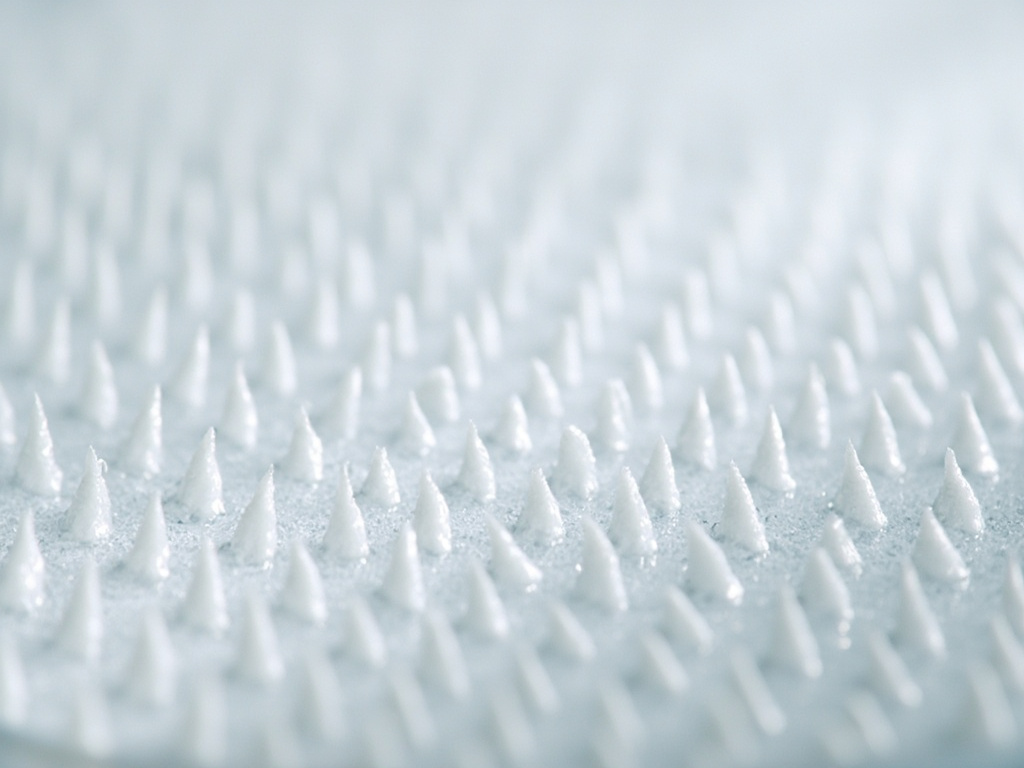
Microneedle patches are arrays of microscopic needles (50-2000 micrometers tall) that painlessly penetrate the stratum corneum to deliver drugs directly into the dermal microcirculation. Unlike traditional transdermal patches limited to molecules under 500 daltons, microneedles can deliver proteins, peptides, vaccines, and even DNA-based therapeutics — expanding the transdermal market from USD 8.1 billion to a projected USD 18-22 billion by 2032.
Four Microneedle Types and Their Trade-Offs
| Type | Material | Drug delivery | Pain | Cost (USD/patch) |
|---|---|---|---|---|
| Solid | Silicon, metal | Coat & pierce (2-step) | Low | 2.50-5.00 |
| Coated | Metal + drug coating | Single-step | Low-medium | 3.00-6.00 |
| Dissolving | Biopolymer (PLA, PVP) | Single-step, full release | Low | 1.50-3.50 |
| Hollow | Silicon, glass | Continuous infusion | Medium | 4.00-8.00 |
Dissolving microneedles dominate consumer applications because they require no special disposal, scale easily with existing patch manufacturing, and deliver 95%+ of encapsulated drug within 30 minutes of application.
Why Microneedles Solve Traditional Patch Limitations
Traditional transdermal patches fail for three reasons. First, molecular size limits: drugs over 500 daltons (insulin 5808 Da, antibodies 150,000 Da) cannot penetrate intact skin. Microneedles bypass this by creating 50-100 micrometer channels. Second, slow onset: nicotine patches take 30-60 minutes to reach effective plasma levels; microneedle nicotine delivery reaches Cmax in under 5 minutes. Third, dose ceiling: conventional patches cap at 10-15 mg/day; microneedle arrays can deliver 50-100 mg in a single 10-minute application.
Clinical studies from 2022-2024 demonstrated microneedle insulin patches achieving glycemic control comparable to subcutaneous injection in Type 1 diabetes patients (n=120), with peak insulin activity at 30 minutes vs 90 minutes for injection.
Manufacturing Challenges and Solutions
Producing microneedle arrays at commercial scale requires three capabilities. First, precision molding: cyclic olefin copolymer or silicone molds with sub-100 micrometer features, typically made via photolithography or CNC micro-machining. Mold cost ranges USD 5,000-50,000 depending on needle density. Second, drug-polymer blending: active ingredients must remain stable during the polymer melt or solvent casting process, often requiring cold-chain manufacturing for biologics. Third, quality control: automated optical inspection at 50x magnification catches needle defects; statistical sampling accepts 0.5% defect rates.
Most commercial microneedle manufacturers operate under ISO 13485 with Class 7 or 8 cleanroom environments. Per-batch production runs of 50,000-200,000 patches are typical for cosmetic and consumer applications; pharmaceutical runs are smaller (5,000-20,000) but command 10-20x higher pricing.
Frequently Asked Questions
Q: Do microneedle patches hurt?
No. Needles are 50-900 micrometers tall, shorter than the pain-sensing nerve depth (1100+ micrometers). Most users report a mild tingling sensation, comparable to gentle tapping. Studies show pain scores of 0.3-0.8 on a 10-point scale vs 4.5-6.0 for subcutaneous injection.
Q: How long does a microneedle patch stay on the skin?
Standard application time is 5-30 minutes for dissolving types, depending on polymer composition and target dose. Solid microneedle patches used as pretreatment stay on 1-5 minutes before removal and replacement with a traditional reservoir patch.
Q: Can microneedle patches deliver vaccines?
Yes. Clinical trials from 2023-2024 demonstrated successful delivery of influenza, measles-rubella, and COVID-19 booster vaccines via dissolving microneedles. The WHO-backed Microneedle Vaccine Patch Consortium is targeting thermostable vaccine delivery for low-resource settings, with first products expected 2026-2028.
Q: What's the shelf life of microneedle patches?
Dissolving microneedles typically have 24-36 month shelf life when stored in sealed foil pouches at room temperature. Vaccines and biologics may require 2-8C storage, reducing shelf life to 12-18 months. Solid microneedles have the longest shelf life (60+ months) since the drug is applied separately.
Henan Hanmeng Bio-Tech is currently developing microneedle patch manufacturing capabilities in partnership with academic research groups, targeting cosmetic and OTC pharmaceutical applications for 2026 launch. The company's existing GMP facility and pilot lines provide a foundation for scaling dissolving microneedle production.
Keywords: microneedle patch technology, dissolving microneedles, transdermal delivery innovation, microneedle vaccine
Looking for a Custom Patch Manufacturer?
Henan Hanmeng Bio-Tech produces private-label pain relief patches, herbal heat patches, cooling patches, nasal strips, and hydrocolloid patches on certified production lines. FDA, EU CE, and ISO 13485 documentation included. Samples shipped in 7 days; bulk MOQ negotiable.
View Our OEM Catalog Request a Quote
Henan Hanmeng Bio-Tech · Henan, China · +86 17796669065 · 396269538@qq.com
CATEGORIES
LATEST NEWS
CONTACT US
QQ: 396269538
Phone: 17796669065
Tel: 17796669065
Email: 396269538
Add: Room 001, 1st Floor, Building 1, Zhengzhou Hangmei International Smart City, Intersection of S102 and Nanquan Road, Xuedian Town, Xinzheng City, Zhengzhou, Henan Province, China