Industry news
Mugwort Essential Oil Patch OEM Manufacturing: Materials, Customization and Packaging
Industry news 2026-09-03 09:14:27 10 views admin
Short answer: Mugwort essential oil patches are adhesive wellness products made by combining a skin-contact patch structure with a botanical or aromatic composition. In an OEM project, buyers can usually customize the backing fabric, patch size and shape, adhesive system, ingredient composition, fragrance, individual pouch and retail packaging. The final specification should be confirmed through compatibility, adhesion, stability and packaging tests rather than selected from an ingredient list alone.
What is a mugwort essential oil patch?
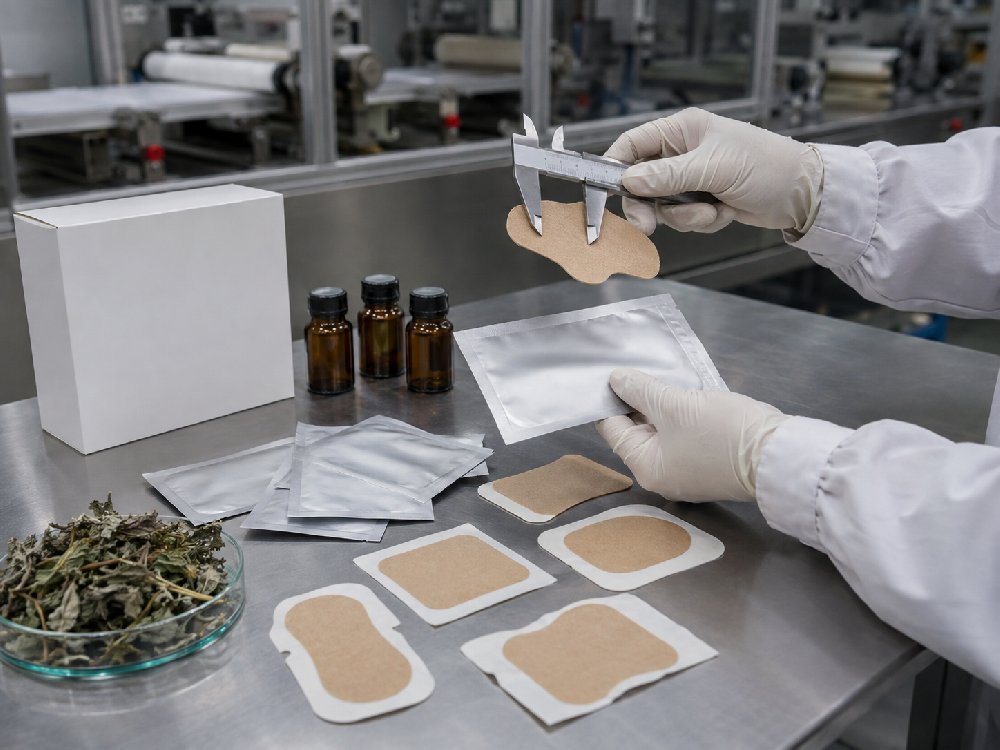
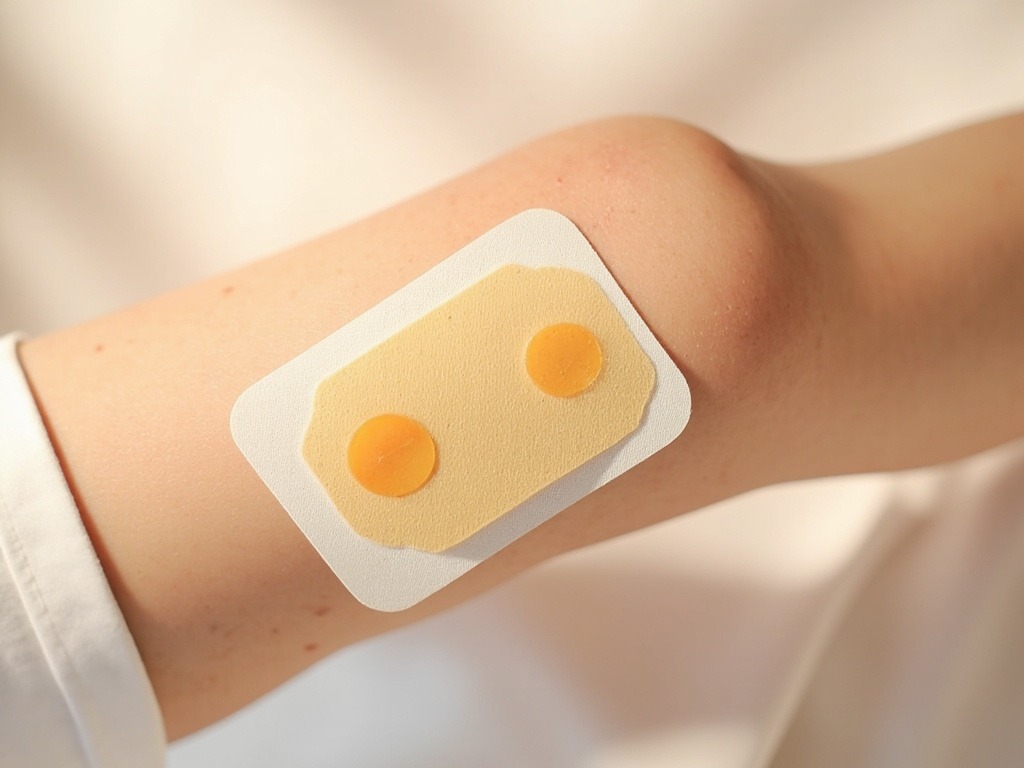
A mugwort essential oil patch is a topical adhesive product that carries mugwort-related botanical ingredients, essential oils or a blended wellness composition. Depending on the product concept, the active composition may be held in a gel, coating, matrix or absorbent carrier and combined with a nonwoven backing and release liner.
These patches are often positioned around warmth, aroma, relaxation or general body comfort. The exact permitted wording depends on the formulation, destination market and product classification. Traditional ingredient use does not by itself support a claim that a patch treats pain, arthritis or another medical condition.
For brands looking for a mugwort essential oil patch OEM manufacturer, the key question is whether the supplier can match the formula with a stable patch and pouch structure. A pleasant sample on the first day is not enough if the oils later migrate, the adhesive weakens or the fragrance escapes through the package.
What materials are used?
Nonwoven or film backing
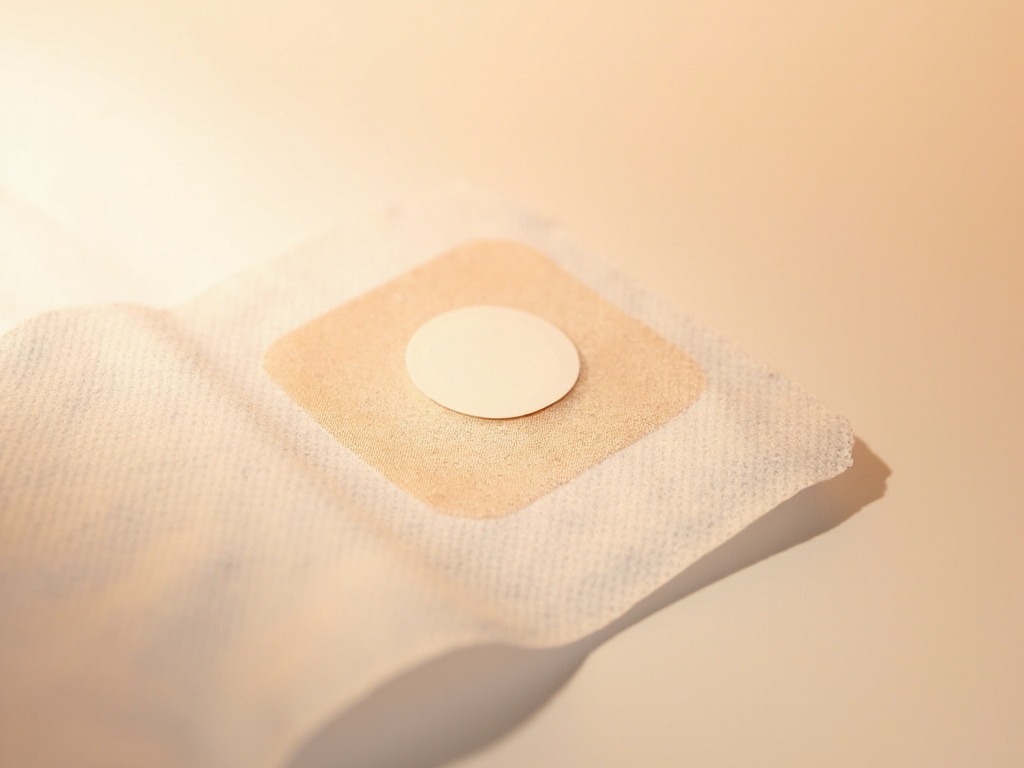
Many herbal body patches use a soft nonwoven backing because it feels familiar, handles well during converting and can suit larger shapes. Polyester, polypropylene or blended nonwovens may be considered according to weight, breathability, stretch and surface texture. A flexible polymer film can be used when a thinner or more occlusive structure is needed.
Skin-contact adhesive
The adhesive must hold the patch in place while remaining compatible with the botanical composition. Acrylic, rubber-based and other pressure-sensitive systems have different initial tack, wear performance and residue behavior. Essential oils can soften some adhesive systems or change peel strength over time, so the complete formula and adhesive must be evaluated together.
Botanical or essential-oil carrier
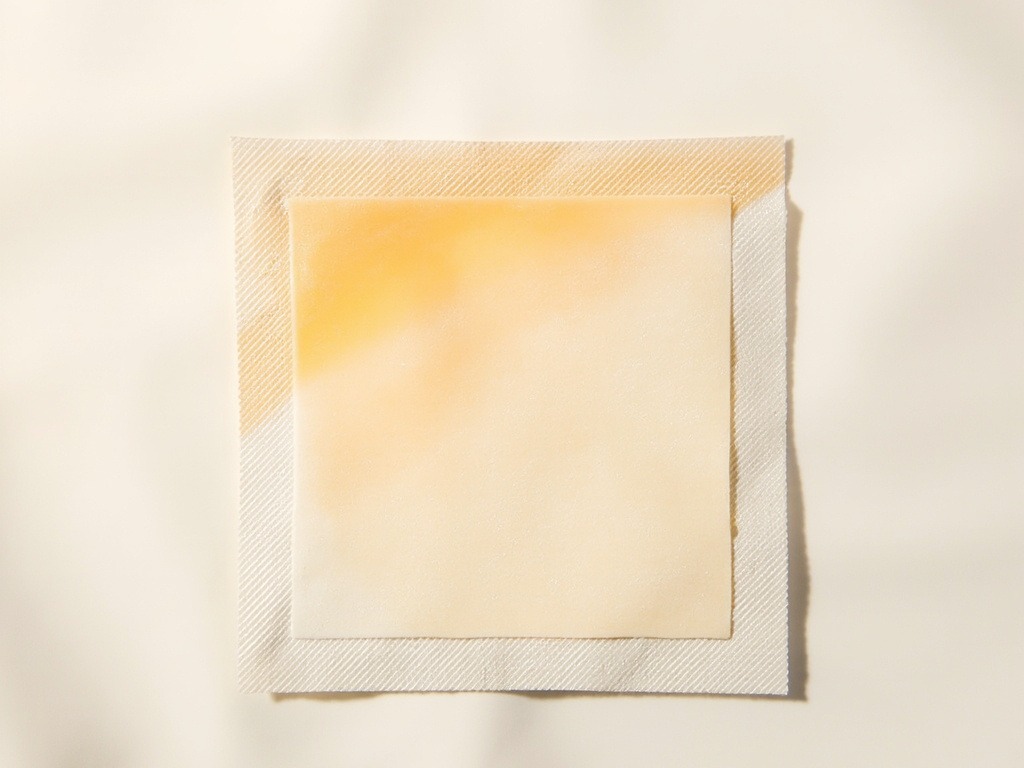
The formula may be incorporated into a gel, coated layer, absorbent pad or pressure-sensitive matrix. The selected carrier should distribute the composition evenly and reduce leakage or excessive migration. Viscosity, coat weight, moisture content and ingredient solubility are practical manufacturing variables.
Release liner
A silicone-coated paper or polymer liner protects the skin-contact surface until use. Release force should be consistent: a liner that releases too easily may separate during packing, while a liner that is too tight can stretch or damage the patch when opened.
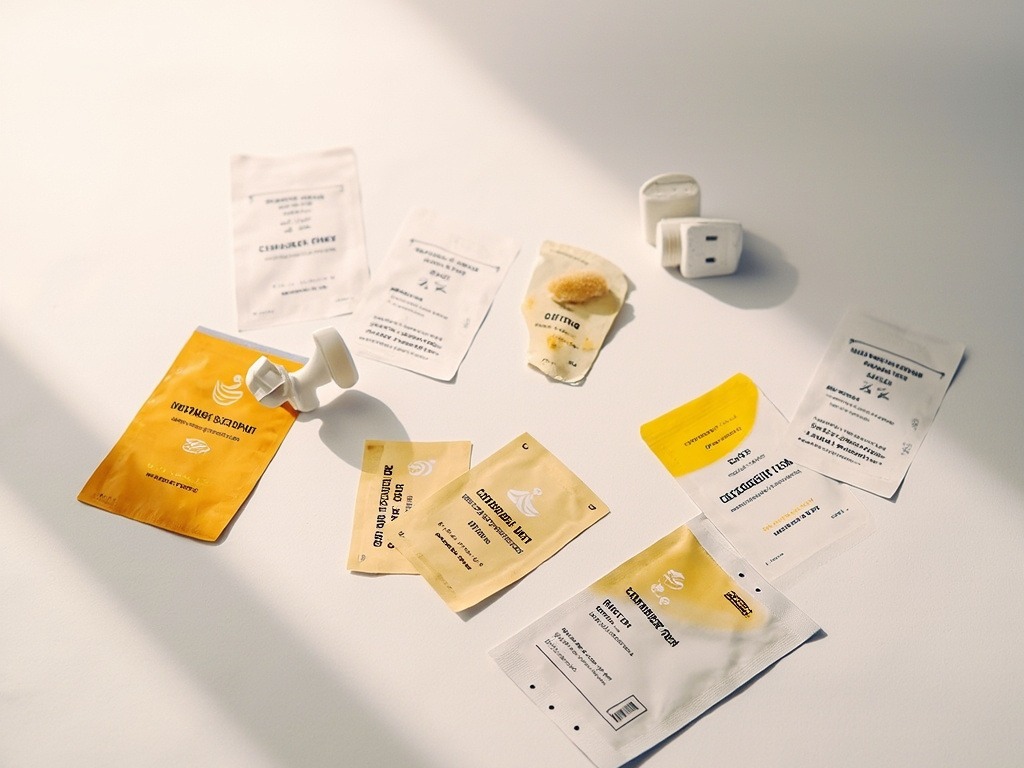
Individual barrier pouch
Essential oils and aromatic materials can be sensitive to evaporation, oxygen and light. A foil laminate or another suitable high-barrier pouch is therefore commonly evaluated. Seal integrity matters as much as the laminate itself. Channel leaks, contamination in the seal area and unsuitable sealing conditions can shorten shelf life.
For a wider comparison of backing, adhesive, gel and liner options, see our guide to health patch materials.
How is a mugwort essential oil patch manufactured?
The exact process depends on whether the composition is a gel, coating or separate carrier, but a typical OEM workflow includes:
Specification review: the target market, use scenario, patch dimensions, wear time, ingredient requirements and packaging concept are documented.
Raw-material evaluation: the backing, adhesive, botanical inputs, carrier, liner and pouch laminate are checked against approved specifications.
Formula preparation: ingredients are weighed and blended using controlled order, time and temperature where relevant.
Coating or filling: the composition is applied to the carrier at a defined weight or placed into a controlled patch structure.
Lamination and aging: backing, functional layer and liner are combined, then conditioned when the construction requires it.
Die cutting: the material is converted to the approved size and shape, with attention to clean edges and consistent dimensions.
Pouch packing: patches are sealed quickly in individual high-barrier pouches to protect volatile ingredients.
Inspection and carton packing: appearance, quantity, seal, print and batch identification are checked before release.
Our article on how health patches are made provides more detail about the general coating, laminating, converting and packaging workflow.
What can be customized?
| Component | Typical OEM options |
|---|---|
| Patch size | Standard body-patch sizes or custom dimensions |
| Patch shape | Rectangle, oval, rounded or custom die-cut |
| Backing | Nonwoven weight, color, texture or film structure |
| Formula | Existing composition or buyer-approved customization |
| Fragrance | Unscented, mugwort-forward or approved aromatic profile |
| Wear profile | Adhesion and approximate use time, subject to testing |
| Individual pouch | Material, dimensions, finish and printed artwork |
| Retail packaging | Units per box, carton format and brand design |
Not every element needs to be customized for a first launch. An established patch construction with custom packaging can reduce development risk. A fully customized formula, backing and die-cut normally requires more sampling, stability work and commercial volume. Our private label health patch guide explains how to select an appropriate customization level.
Why formula compatibility matters
Botanical extracts and essential oils can interact with adhesives, plastics, inks and pouch laminates. A formula that looks stable in a glass beaker may behave differently when coated onto a patch and sealed for months.
Compatibility evaluation should consider:
Oil migration into the backing or adhesive
Changes in tack, peel strength or residue
Color or odor change during storage
Separation, crystallization or moisture loss
Interaction with the release coating
Loss of fragrance through the pouch
Printing or laminate changes caused by the contents
This is why an OEM sample should use the intended production materials, not a temporary substitute that will never be used in the final order.
What quality checks should buyers request?
A practical quality plan covers both the patch and its package. Relevant checks may include appearance, patch dimensions, coat or fill weight, liner release, initial tack, peel behavior, residue observation, pouch seal strength, leak testing and packaging count.
For botanical compositions, ingredient identity and incoming specifications should be defined. The finished product should also undergo stability work appropriate to the formula and target shelf life. Real-time and accelerated storage can reveal migration, drying, odor loss or adhesion changes that are not visible in fresh samples.
Buyers should agree on the test method and acceptance criteria before production. Terms such as “strong adhesion” or “long lasting” are too subjective unless both parties use the same method and conditions.
What determines MOQ?
There is no universal MOQ for mugwort patches. Minimum quantity is influenced by the formula batch size, coating or filling process, die-cut tooling, printed pouch minimum, retail-box printing and the number of variants.
A standard composition in an existing size may allow a simpler entry point. Custom fragrances, several package designs or a new die shape can raise the minimum. Ask the manufacturer to separate the patch MOQ, printed-pouch MOQ and carton MOQ so the quotation is easier to understand.
What determines production lead time?
Lead time normally includes sample development, formula or material confirmation, stability planning, artwork review, packaging production, patch manufacturing, inspection and final packing. The clock should begin only after the approved specification and print files are complete.
Projects are often delayed by late changes to claims, ingredient wording, pouch dimensions or units per box. A clear product brief at the start is more effective than trying to accelerate production after artwork has been approved.
How should claims and labeling be handled?
Mugwort and essential-oil patches should be described according to their real formulation, intended use and market classification. Avoid unsupported disease-treatment statements or guaranteed outcomes. Warming, aromatic or general wellness positioning may still require careful wording, warnings and evidence depending on the destination market.
Packaging review should cover the product name, ingredient or material information where required, directions, use duration, warnings, storage conditions, responsible company details, lot identification and shelf life. Regulatory review should occur before bulk printing, particularly when a buyer wants to use pain, inflammation or therapeutic terminology.
Questions to ask an OEM manufacturer
Which parts of the patch are manufactured in-house?
What backing, adhesive and carrier are proposed for the formula?
How will essential-oil migration and odor retention be evaluated?
Can the supplier provide production-representative samples?
What finished-product stability and pouch tests are planned?
What are the separate MOQs for the patch, pouch and retail box?
How are approved samples, formulas and artwork controlled for reorders?
Which documents are available for the destination market?
Working with Hanmeng Bio-Tech
Hanmeng Bio-Tech supports OEM and private-label health patch development, including material selection, formula coordination, sampling, packaging and production planning. A useful mugwort patch inquiry should include the target market, patch size, desired wear time, ingredient concept, fragrance preference, package count and expected order quantity.
These details help the development team propose a realistic sample and manufacturing plan. Contact our OEM team to discuss a mugwort essential oil patch or another herbal wellness patch project.
Frequently asked questions
Can mugwort essential oil patches be private labeled?
Yes. Private-label options commonly include the patch specification, individual pouch, retail box, brand artwork and pack quantity, subject to the manufacturer's capabilities.
Can the formula be customized?
Formula customization may be possible, but the new composition must be checked for manufacturing suitability, material compatibility, stability and market requirements.
Which backing is commonly used?
Soft nonwoven fabric is widely considered for herbal body patches, while film or composite structures may be selected for specific barrier, flexibility or appearance requirements.
Why is a foil pouch used?
A suitable barrier pouch helps reduce the loss of volatile aromatic ingredients and protects the patch from moisture, oxygen and light during storage.
Should samples be tested after storage?
Yes. Fresh samples alone may not reveal changes in odor, adhesion, migration, color or package compatibility that develop over time.
Conclusion
A successful mugwort essential oil patch OEM project depends on more than adding botanical ingredients to an adhesive product. The formula, backing, adhesive, carrier, release liner and pouch must work as one stable system.
Brands can reduce risk by defining the market and product brief early, approving production-representative samples, agreeing on measurable acceptance criteria and completing label review before mass printing.
CATEGORIES
LATEST NEWS
CONTACT US
QQ: 396269538
Phone: 17796669065
Tel: 17796669065
Email: 396269538
Add: Room 001, 1st Floor, Building 1, Zhengzhou Hangmei International Smart City, Intersection of S102 and Nanquan Road, Xuedian Town, Xinzheng City, Zhengzhou, Henan Province, China