Technological innovation
Patch Photostability: When the Pouch Really Needs a Light Barrier
Technological innovation 2026-07-14 09:30:00 119 views admin
Patch Photostability: When the Pouch Really Needs a Light Barrier
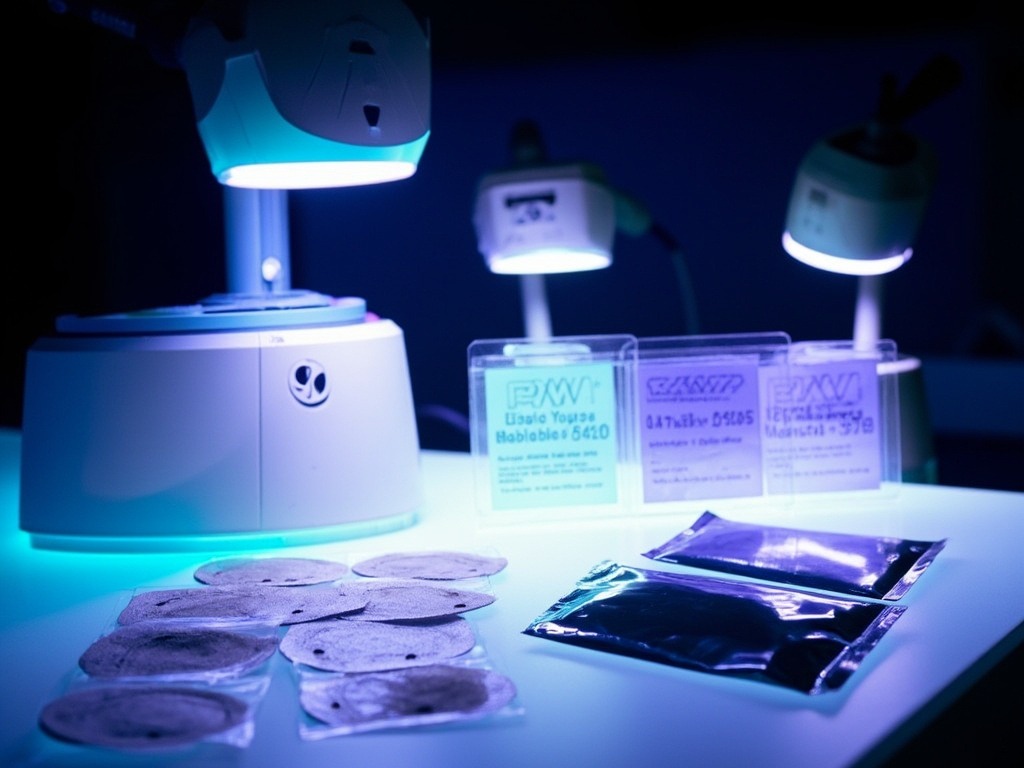
A patch does not automatically need a foil pouch. The packaging decision should follow light-exposure data. ICH Q1B uses a sequence: test the product fully exposed, then in the immediate pack if needed, and finally in the marketing pack until the results show adequate protection.
ICH Q1B addresses photostability of new drug substances and products. The same experimental logic can inform other patch types, but the formal regulatory scope, acceptance criteria and test plan depend on product classification.
The packaging question behind the test
Light can affect more than an active ingredient. A patch matrix may discolour, a botanical extract may oxidise, an adhesive may change, or an opaque backing may protect the formula while a clear release liner does not. Guessing at the pouch can lead to two expensive mistakes: insufficient protection or a high-barrier laminate that the product never needed.
ICH Q1B treats photostability as part of stress testing. The goal is to find out whether light produces unacceptable change and, when it does, whether the immediate or marketing pack prevents it.
The decision path
Step 1: expose the patch outside its immediate pack
Begin with the drug product directly exposed, presented so that light reaches a representative area. Use a temperature control or a dark control so that a heat effect is not mistaken for a light effect.
For confirmatory work, ICH Q1B specifies overall illumination of at least 1.2 million lux hours and integrated near-ultraviolet energy of at least 200 watt hours per square metre. The exposure can be measured with calibrated radiometers or lux meters, or a validated actinometric system.
Step 2: decide whether the observed change is acceptable
The applicant defines and justifies acceptable change. Evaluation should use methods capable of detecting photolytic degradation and should consider physical properties as well as assay and degradants.
For a patch, record observations that can be lost in a single “pass” entry: colour on the backing and matrix, adhesive bleed, crystal formation, curling, liner release, odour and any change in the relevant delivery test. Use pre-defined acceptance criteria where the attribute affects quality or use.
Step 3: repeat in the immediate pack if protection is needed
If direct exposure causes unacceptable change, test the patch in its immediate pack. This is where pouch construction becomes an experimental variable rather than a purchasing preference.
A transparent polymer pouch, a printed high-barrier film and an aluminium-containing laminate may provide different light protection. Barrier against moisture or oxygen is a separate property, so a good photostability result does not by itself establish the full pack specification.
Step 4: test the marketing pack when the immediate pack is not enough
ICH Q1B recommends progressing to the marketing pack when necessary. For a patch, that could include a carton that blocks light around a partly protective pouch. If protection depends on the carton, distribution and consumer instructions must preserve that configuration.
Testing can stop when the results demonstrate adequate protection. The point is not to run every configuration; it is to identify the simplest pack that keeps the product within justified limits.
What the lab set-up should record
| Record | Why it matters |
|---|---|
| Light source and spectral range | Confirms that visible and near-UV exposure match the selected ICH option. |
| Lux-hour and near-UV dose | Shows that minimum confirmatory exposure was reached. |
| Sample orientation and exposed area | Prevents backing, liner or pouch orientation from hiding the actual exposure. |
| Temperature or dark control | Separates photochemical change from local heating. |
| Pack construction and artwork coverage | Links the result to the exact material and printed design tested. |
| Initial, exposed and control results | Provides a usable comparison for physical and chemical changes. |
One batch, with a reason to add more
ICH Q1B normally uses one drug-product batch during development and confirmation when the product is clearly photostable or photolabile. If the result is equivocal, testing of up to two additional batches is recommended.
“One batch” does not make sample control optional. Test units should represent the formulation and pack under evaluation. If two pouch suppliers, ink coverages or backing colours are being compared, identify them as separate variables and avoid pooling results.
Four outcomes and what they mean
- No unacceptable change outside the pouch: light protection may not be the factor that drives pouch opacity, although moisture, oxygen and seal needs still may.
- Change outside the pouch, none in the immediate pack: the tested pouch provides adequate light protection for the assessed attributes.
- Change in the immediate pack, none in the marketing pack: the carton or secondary pack is part of the protective system and should be controlled accordingly.
- Change remains in the marketing pack: formulation, backing, pouch or secondary packaging needs more development before the proposed presentation is supported.
Short answers for packaging teams
Is a foil pouch always safer?
It can provide strong light and barrier protection, but “safer” depends on the product’s failure mechanisms. Extra layers can add cost and complicate recyclability. Use the test result to decide.
Can the carton replace an opaque pouch?
Only if testing supports the marketed system and the carton remains with the product during the period when protection is needed.
Does ICH Q1B replace long-term stability?
No. Photostability is part of stress testing. Shelf-life support still relies on the broader stability programme and justified specifications.
A useful OEM brief to Henan Hanmeng Bio-Tech states the light-sensitive ingredients, backing colour, proposed pouch structures, market carton and target shelf life. That gives the laboratory a real comparison instead of a yes-or-no request for “foil.”
Source
- ICH Q1B: Photostability Testing of New Drug Substances and Products, especially the general procedure and drug-product decision sequence.
- ICH Q1A(R2): Stability Testing of New Drug Substances and Products, for the wider stability programme.
Looking for a Custom Patch Manufacturer?
Henan Hanmeng Bio-Tech produces private-label pain relief patches, herbal heat patches, cooling patches, nasal strips, and hydrocolloid patches on certified production lines. FDA, EU CE, and ISO 13485 documentation included. Samples shipped in 7 days; bulk MOQ negotiable.
View Our OEM Catalog Request a Quote
Henan Hanmeng Bio-Tech · Henan, China · +86 17796669065 · 396269538@qq.com
CATEGORIES
LATEST NEWS
CONTACT US
QQ: 396269538
Phone: 17796669065
Tel: 17796669065
Email: 396269538
Add: Room 001, 1st Floor, Building 1, Zhengzhou Hangmei International Smart City, Intersection of S102 and Nanquan Road, Xuedian Town, Xinzheng City, Zhengzhou, Henan Province, China