Technological innovation
Patch Shelf-Life Testing: An ICH Q1A Study Plan That Holds Up
Technological innovation 2026-07-14 09:30:00 100 views admin
Patch Shelf-Life Testing: An ICH Q1A Study Plan That Holds Up

A defensible shelf life for a drug patch comes from stability data in the proposed market pack, not from one accelerated oven result. ICH Q1A(R2) calls for data from at least three primary drug-product batches, with long-term and accelerated studies designed to cover storage, shipment and use.
This article applies ICH Q1A(R2) to drug-patch development. General wellness, cosmetic and device patches need a stability programme suited to their own claims, materials and target-market rules; they should not borrow a pharmaceutical shelf life without evidence.
Start with the commercial pack, not a lab container
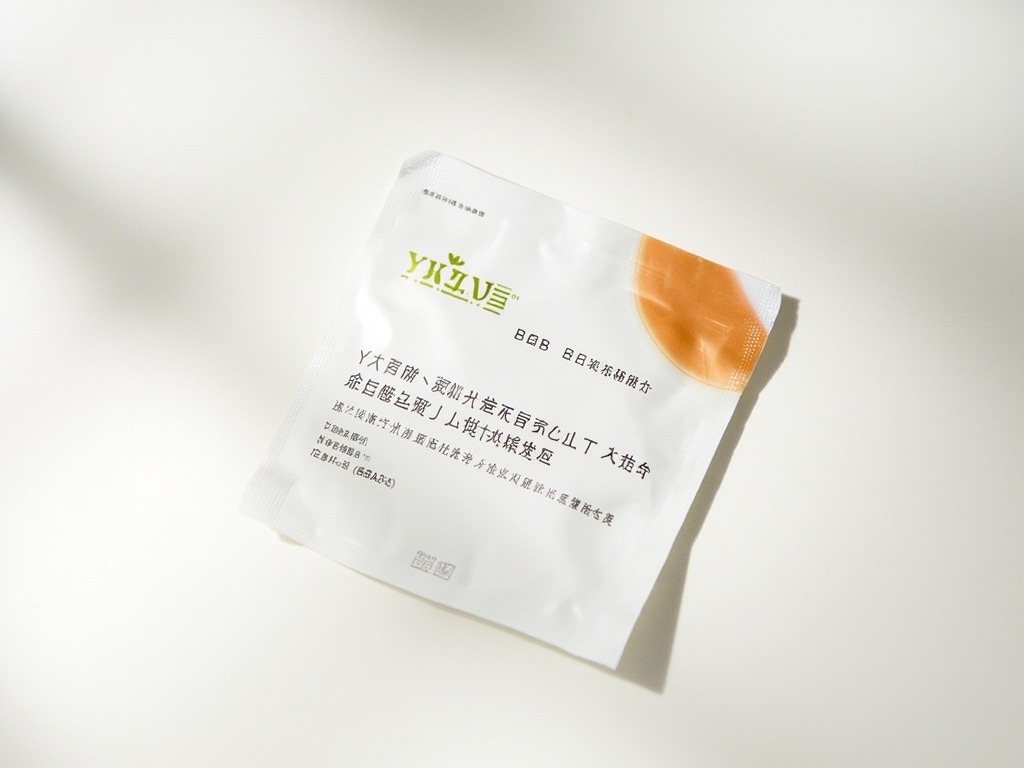
ICH Q1A(R2) says drug-product stability testing should use the container-closure system proposed for marketing, including secondary packaging and the label where appropriate. That point is easy to miss during patch development. A promising matrix stored in a sealed glass jar does not establish how the finished patch will behave inside its release liner and pouch.
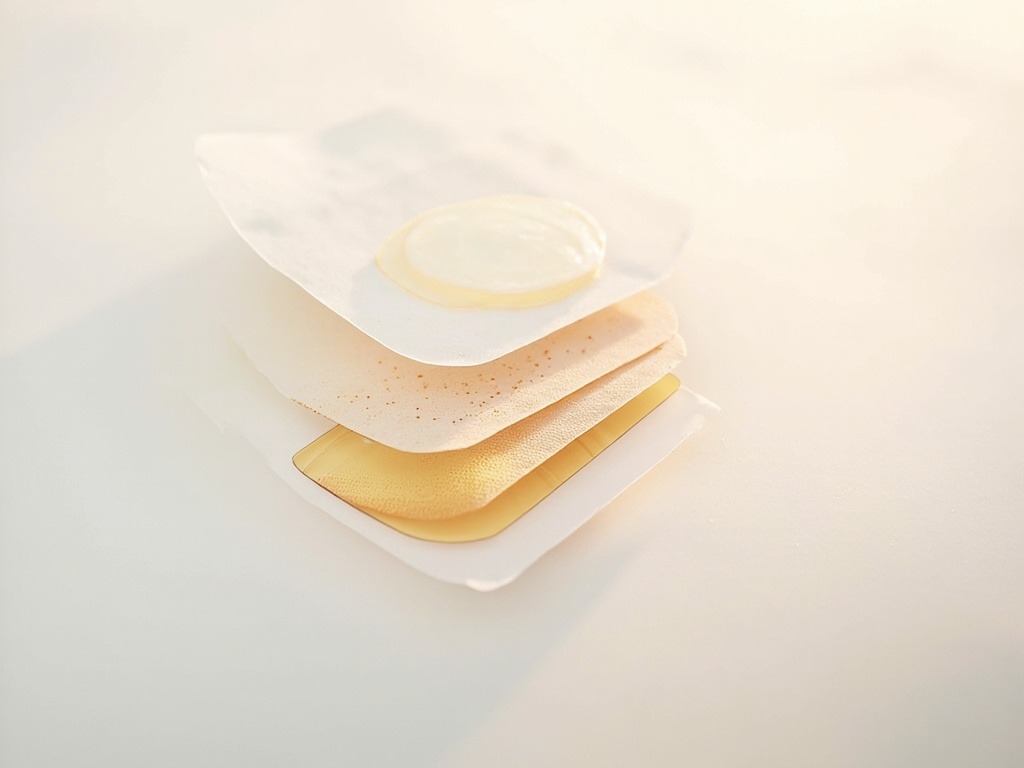
The pouch can change the result. Moisture ingress may alter tack or hydrogel water content. Loss of volatile ingredients can change assay or odour. A seal failure can expose only part of a batch. Stability therefore evaluates the product and its packaging as a system.
The core ICH study map
| Study | General ICH Q1A(R2) condition | Minimum data at submission | Typical time points |
|---|---|---|---|
| Long term | 25°C ± 2°C / 60% RH ± 5% RH, or 30°C ± 2°C / 65% RH ± 5% RH | 12 months on at least three primary batches | Every 3 months in year 1, every 6 months in year 2, then annually |
| Intermediate | 30°C ± 2°C / 65% RH ± 5% RH | 6 months when the study is triggered | At least 0, 6, 9 and 12 months from a 12-month study |
| Accelerated | 40°C ± 2°C / 75% RH ± 5% RH | 6 months | At least 0, 3 and 6 months |
If 30°C/65% RH is selected as the long-term condition, the guideline does not set a separate intermediate condition. Alternative conditions may be used when scientifically justified.
Three batches do not mean three handmade samples
ICH Q1A(R2) asks for at least three primary batches of the drug product. They should use the same formulation and market container-closure system and should simulate the intended production process. Two of the three should be at least pilot scale; a smaller third batch can be justified.
For a coated patch, record the variables that could hide behind the word “batch”: adhesive or gel preparation, coating run, drying conditions, lamination, die cutting and pouch sealing. If all three stability batches come from one coating roll, the programme may say less about routine variation than the batch count suggests.
What belongs on a patch stability specification?
ICH requires attributes that can change during storage and affect quality, safety or efficacy. It does not provide one universal patch test panel. The product team must select stability-indicating methods and justify acceptance criteria.
A drug-patch protocol may consider:
- Assay and degradation products, using validated stability-indicating methods.
- Drug-release or performance testing where it represents dose-delivery function.
- Adhesion behaviour, such as peel, tack, wear or edge lift, when relevant to use.
- Physical condition, including colour, odour, crystallisation, cold flow, curling and liner release.
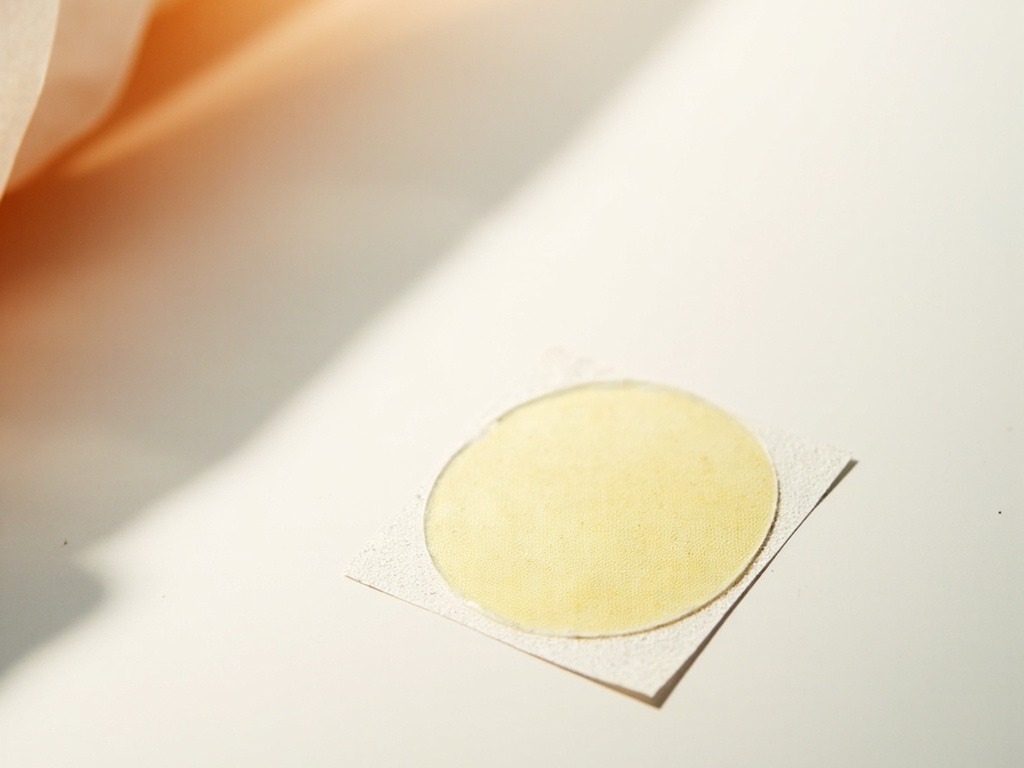
- Water content or weight change for hydrogels and moisture-sensitive matrices.
- Pouch and seal integrity where pack failure can change product quality.
- Microbiological attributes when the formulation and intended use make them relevant.
Not every test belongs at every time point. The protocol should explain the choice rather than repeat a standard panel by habit.
Why “six months at 40°C equals two years” is a poor shortcut
Accelerated data help reveal change and assess short-term excursions, but ICH Q1A(R2) does not give a universal conversion from six accelerated months to a fixed commercial shelf life. Heat and humidity can create a failure mechanism that is slow or absent at room temperature. They can also miss a mechanism driven by light, oxygen, volatile loss or mechanical wear.
If significant change occurs during accelerated testing, the long-term data and, where applicable, intermediate study become more important. For a drug substance, the guideline defines significant change as failure to meet specification. Drug products have product-specific criteria described later in Q1A(R2).
A planning example for a new pouched patch
Suppose a brand wants a 24-month shelf life. Before the first formal batch, the team should lock the formulation, critical materials, pouch construction and test methods far enough that the stability result represents the product to be sold.
- Make three primary batches that represent the intended process; use different drug-substance batches where possible.
- Package them in the proposed liner, individual pouch and relevant secondary pack.
- Place samples on long-term and accelerated conditions, with intermediate capacity available if triggered.
- Test the initial sample before storage; otherwise every later comparison rests on an uncertain baseline.
- Continue long-term testing beyond the first 12 months until it covers the proposed shelf life.
- Open a documented assessment when formulation, coating process, liner, pouch or seal parameters change.
Questions worth answering before the chamber is loaded
Can development batches support the label shelf life?
They can provide supporting information, but the formal programme needs primary batches that represent the proposed production process and market packaging.
Can a different pouch be introduced after the study starts?
It may require bridging or new data because the container-closure system is part of the tested product. The answer depends on the material change and the risks it creates.
Does passing assay prove the patch is stable?
No. A patch can retain chemical assay while adhesion, release behaviour, physical condition or package integrity drifts outside an appropriate specification.
When discussing a drug-patch project with Henan Hanmeng Bio-Tech, the stability brief should state the target market, classification, intended shelf life, pack construction and required tests. A requested expiry date without those inputs is only a date.
Source
- ICH Q1A(R2): Stability Testing of New Drug Substances and Products, sections 2.2.3 to 2.2.7.
Looking for a Custom Patch Manufacturer?
Henan Hanmeng Bio-Tech produces private-label pain relief patches, herbal heat patches, cooling patches, nasal strips, and hydrocolloid patches on certified production lines. FDA, EU CE, and ISO 13485 documentation included. Samples shipped in 7 days; bulk MOQ negotiable.
View Our OEM Catalog Request a Quote
Henan Hanmeng Bio-Tech · Henan, China · +86 17796669065 · 396269538@qq.com

CATEGORIES
LATEST NEWS
CONTACT US
QQ: 396269538
Phone: 17796669065
Tel: 17796669065
Email: 396269538
Add: Room 001, 1st Floor, Building 1, Zhengzhou Hangmei International Smart City, Intersection of S102 and Nanquan Road, Xuedian Town, Xinzheng City, Zhengzhou, Henan Province, China